Mastering ChatGPT Prompt Engineering
Think of ChatGPT Prompt Engineering not as a rigid set of rules, but as a dynamic, conversational style guide for your interaction with AI. Just as a premium font dictates the tone of a visual message, the structure of your prompt shapes the personality and depth of the AI's response. It is the bridge between a generic, one-size-fits-all answer and a nuanced, high-value piece of content. For creators, marketers, and entrepreneurs, understanding this discipline is no longer optional; it is a core skill for digital productivity.
The Anatomy of a Powerful Prompt
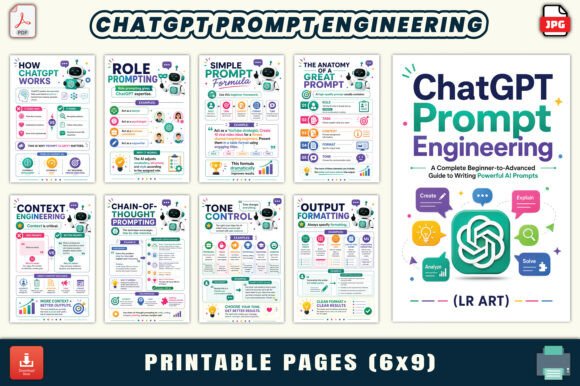
A well-engineered prompt has a distinct visual and logical hierarchy. It is clean, direct, and layered with context. Imagine it as a carefully composed layout where every element serves a purpose. At its foundation lies the Role, which assigns the AI a specific persona—perhaps a seasoned brand strategist or a technical copywriter. This immediately sets the vocabulary and perspective. Above that sits the Context, providing the necessary background, target audience, and constraints. Finally, the Task itself is articulated with precision, often using specific action verbs and desired output formats. This structured approach transforms a simple question into a powerful command, yielding results that are consistent, relevant, and ready for immediate application in your projects.
From Beginner Queries to Advanced Frameworks
Many users begin with simple, open-ended questions. While functional, this is like using a default system font for a luxury brand identity—it lacks intention. Advanced ChatGPT Prompt Engineering introduces frameworks that act as your typographic toolkit. Role Prompting is your display font, establishing a bold, authoritative voice. Context Engineering is your body copy font, ensuring clarity and readability over long stretches. For complex problem-solving, Chain-of-Thought Prompting guides the AI through a logical sequence, much like a well-designed editorial layout guides a reader's eye from headline to conclusion. Mastering these techniques allows you to move beyond basic content generation and into the realm of strategic AI partnership.
Practical Applications Across Creative Fields
The true value of this skill set is its universal applicability. For a marketer, a meticulously crafted prompt can generate a month's worth of social media graphics copy, tailored to different platforms and audience segments. A freelance designer can use it to brainstorm unique logo design concepts, providing the AI with the brand's core values and desired emotional resonance. In publishing, it assists in developing detailed chapter outlines, character backstories, or even compelling book jacket blurbs. The guide emphasizes creating ready-to-use AI prompts—templates that you can adapt, much like a versatile font family with multiple weights and styles, ensuring your workflow is both efficient and creatively consistent.
Integrating AI into Your Design and Business Workflow
Effective prompt engineering is about integration, not replacement. Consider it a core design asset in your creative toolkit. When working on packaging design, you might prompt the AI to generate descriptive text that matches the artisanal, modern typography of your label. For web design, it can help craft microcopy that enhances user experience, aligning with the clean, intuitive flow of your layout. The key is to evaluate the output as you would any design element: Does it fit the project's tone? Is it readable and engaging? Does it strengthen the overall brand identity? This critical eye ensures the AI's output elevates your work rather than diluting it.
Choosing and Applying Your Prompting Style
Selecting the right prompting technique is akin to choosing a typeface for a project. You must first understand the project's personality and requirements. A technical manual requires a different approach than a whimsical children's book. The included 30 detailed pages provide a structured path to evaluate this fit. You learn to review different prompting styles (the equivalent of font families) and test their pairings—for instance, using a direct, imperative prompt for task automation alongside a more exploratory, open-ended prompt for creative ideation.
Crucially, readability applies to prompts as well. A convoluted, ambiguous instruction will produce confused output. The guide teaches clarity and conciseness, ensuring your intent is communicated effectively. Furthermore, understanding the scope of use—whether for personal projects or commercial applications—mirrors the considerations of commercial font licensing. The techniques you learn are designed for scalability, allowing you to apply them from small hobbyist blogs to large-scale business automation without compromising quality.
Beyond the Basics: Automation and Scale
The advanced sections of mastering ChatGPT Prompt Engineering open doors to AI automation. This is where you move from writing individual prompts to building systems. You can create prompt sequences that automate customer service email drafts, generate weekly performance report summaries, or even develop initial concepts for social media graphics campaigns. This is the modern typography of business operations—creating a clean, efficient, and repeatable system that saves hours of manual work. It’s about building a library of intelligent templates that adapt to your needs, much like a comprehensive design asset library.
Ultimately, this discipline is about communication. It is the art of speaking the language of a powerful tool to get exactly what you need, whether that’s a burst of creative inspiration or a structured data analysis. By investing in this skill, you are not just learning to use an AI; you are learning to direct it, collaborate with it, and unlock a new level of professional capability in your creative and business endeavors. The power lies in the precision of your words.