Transform Your Digital Designs with a Wirebound Notebook Mockup for Canva
Every designer, planner creator, or ebook author knows the struggle: you have a stunning cover and beautiful interior pages, but how do you show them off in a way that truly connects? Flat, digital files on a screen often lack the tangible appeal that makes a product feel real and desirable. This is where a high-quality mockup becomes not just useful, but essential. A Wirebound Notebook Mockup for Canva bridges that gap, offering a photorealistic stage for your work that speaks directly to your audience's imagination.
More Than Just a Pretty Picture: The Anatomy of a Great Mockup
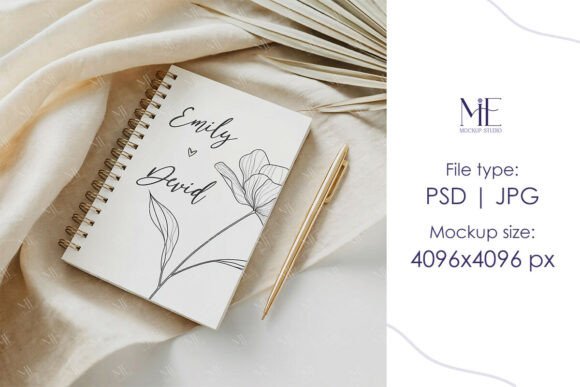
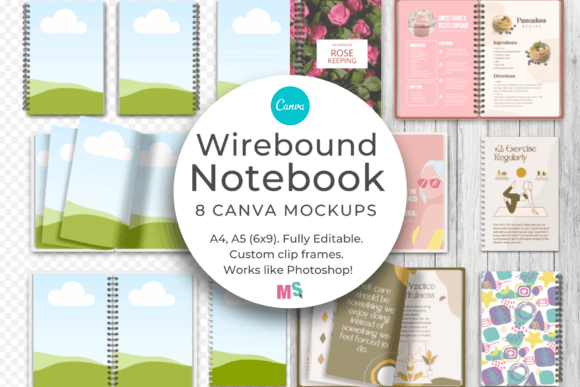
At its core, this mockup is a meticulously crafted digital template designed to mimic a physical, spiral-bound notebook. Think of the subtle texture of the cover stock, the realistic shadows cast by the wire rings, and the slight curvature of the pages. It’s not just a flat image; it’s a scene. The visual personality is clean, professional, and versatile. It doesn’t scream for attention with its own style, which is exactly the point—it’s a neutral, high-end canvas that lets your design be the hero. Whether your aesthetic is minimalist, vintage, bold, or playful, this backdrop adapts, ensuring your planner or ebook cover looks like a finished product sitting on a desk, ready to be picked up.
This adaptability is what makes it a powerful design asset. For a brand identity presentation, it communicates thoughtfulness and quality. For a social media feed, it stops the scroll with a tangible, "I want that" moment. It’s the difference between saying "here’s my ebook cover" and showing "here’s your new favorite ebook."
Practical Applications Across Your Creative Workflow
The true value of a tool like this is measured in its utility. Let’s break down where this Canva mockup template excels.
- Portfolio & Shop Listings: For designers selling templates on Etsy or Creative Market, showing your work in context is non-negotiable. A mockup instantly elevates a simple PDF into a must-have product. It answers the buyer’s question: "What will this actually look like when I use it?"
- Client Presentations & Pitches: Move beyond static PDFs. When presenting an ebook or planner design to a client, placing it in a realistic mockup helps them visualize the end result. It’s a subtle but powerful way to enhance professionalism and close the approval loop faster.
- Social Media Marketing & Launches: Launching a new digital product? Create a series of engaging images for Instagram, Pinterest, or your blog. You can showcase the cover, a peek at the interior pages, and even a flat-lay scene with other props—all centered around your design in the mockup. It’s a cohesive visual story that drives engagement and sales.
- Personal Projects & Hobbyists: Even if you’re creating a family recipe book or a personal journal, seeing it in a mockup makes the project feel complete and special. It’s a rewarding way to celebrate your own creativity.
How to Use This Tool for Maximum Impact
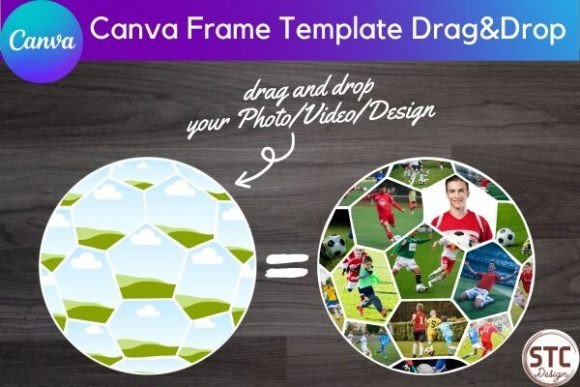
Getting started is designed to be intuitive, leveraging Canva’s familiar drag-and-drop interface. Once you access the template, you’ll find custom-created clip frames. These are essentially smart placeholders where you simply drag your cover design or page spreads. The mockup handles the perspective, shadows, and lighting automatically, giving you a professional end product in seconds.
A key piece of practical advice: pay attention to the details. Ensure your design’s resolution is high enough (300 DPI is ideal for print-quality mockups) so it doesn’t appear pixelated when inserted. Also, consider the mockup’s setting. If your brand is earthy and organic, a mockup with a wooden desk background might be perfect. For a tech-focused ebook, a cleaner, more minimalist setting could be better. This is where understanding your brand identity and audience comes into play.
Choosing the Right Mockup for Your Project
Not all mockups are created equal. When evaluating a wirebound notebook mockup for Canva or any other, consider these points:
- Realism: Do the shadows look natural? Is the texture convincing? The goal is to create an image that feels authentic, not obviously digital.
- Customization: Can you change the background or the color of the notebook’s wire? Flexible options allow you to tailor the scene to your project’s specific color palette and mood.
- Ease of Use: The workflow should be straightforward. A good mockup template will include clear instructions and be organized logically within Canva.
- Licensing: This is crucial. Always check the terms of use. For instance, the terms for this specific mockup, as outlined by the provider, clearly state you cannot resell the mockup file itself or incorporate it into new templates for sale. You are licensed to use it to create final images for your own products, portfolios, and marketing. Understanding this distinction is vital for ethical and legal commercial use.
In a crowded digital marketplace, presentation is your silent salesperson. A premium font